
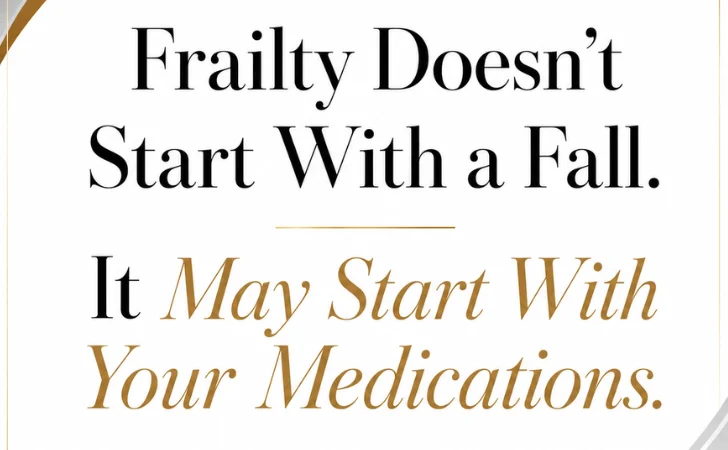
You’re thinking osteoporosis is just about aging, menopause, andropause, calcium, and maybe vitamin D? Not even close.
Some of the most commonly prescribed medications can quietly impact bone health.
Not always by directly lowering bone density.
Sometimes by increasing falls.
Sometimes by altering hormone balance.
Sometimes by interfering with calcium absorption.
Sometimes by accelerating bone breakdown.
And the frustrating part?
Many patients are never warned.
That doesn’t mean these medications are “bad.” Some are absolutely necessary.
But informed patients make better decisions.
Medications That May Impact Bone Health
1. Proton Pump Inhibitors (Acid Blockers)
Examples: Prilosec, Protonix, Nexium
Long-term PPI use has been associated with increased fracture risk, likely related to impaired calcium absorption and possible effects on bone remodeling.
That “harmless” daily acid blocker? Maybe not so harmless long term.
The FDA warned years ago about fracture risk with prolonged, higher-dose proton pump inhibitor (PPI) use. Research has shown hip fracture risk rises with duration of use, starting around 22% after one year and climbing from there. Multiple large studies have continued to link chronic PPI use with increased fracture risk.
What matters: duration, dose, and whether the medication is actually still needed.
A lot of people were started on acid blockers years ago and never reassessed.
2. Steroids (Big Offenders)
Examples: Prednisone, Dexamethasone, Methylprednisolone
These are some of the most well-established medications linked to bone loss.
Steroids:
- decrease bone formation
- increase bone breakdown
- reduce calcium absorption
- weaken muscle (which increases fall risk)
Even relatively short courses may have impact, but chronic use is where risk becomes especially significant.
3. SSRIs / SNRIs
Examples: Lexapro, Prozac, Zoloft, Cymbalta, Effexor
Mental health matters and medications are often necessary.
But yes, these medications have been associated with lower bone density and increased fracture risk in some studies.
Possible mechanisms include serotonin signaling effects in bone plus increased fall risk in certain populations.
This is not a “stop your antidepressant” conversation.
It’s a “know your risks and protect accordingly” conversation.
4. Sleep Medications / Sedatives
Examples: Ambien, Xanax, Klonopin, Temazepam
These may not directly damage bone, but they absolutely increase fall risk.
I have seen countless falls in elderly patients resulting in fractures due to over prescribing and misuse of these medications. Especially in the long-term care setting.
And fractures often happen because someone falls… not because their bone spontaneously snaps (but this happens too)
5. Birth Control
Specifically: Depot medroxyprogesterone (Depo-Provera)
Not all hormonal birth control affects bone health equally. Depot medroxyprogesterone (Depo-Provera) is the most well-established contraceptive linked to bone loss due to estrogen suppression.
Because it suppresses ovarian estrogen production, bone health deserves part of the conversation—especially with longer-term use.
6. Muscle Relaxers + Opioids
Examples: Baclofen, Cyclobenzaprine, Tizanidine, Hydrocodone
Same issue:
- dizziness
- slowed reaction time
- impaired coordination
- sedation
Translation? Higher fall risk.
The Bigger Message
Medication risk is cumulative.
The person taking:
- a sleep med
- an antidepressant
- thyroid hormone
- reflux medication
- occasional steroids
…has a very different risk profile than someone taking one medication alone.
Protect Your Bones
Ask:
✔ Do I still need this medication?
✔ Is this the lowest effective dose?
✔ Should my bone health be monitored?
✔ Am I strength and balance training?
✔ Am I getting adequate protein?
✔ Vitamin D? Magnesium? Calcium if appropriate?
✔ Have hormones become part of the conversation?
Because preventing frailty starts decades before the fracture.
This matters even more after 40, and especially in menopause.
This also applies to men.
Stay Balanced Everyone!
–Michele NP